
Uncategorized

Best digital marketer in Malappuram-image

How AI Is Changing the Future of Web Design

Technology is changing quickly, and Artificial Intelligence (AI) has become a part of many things we do every day. Web design is one area where AI is creating new possibilities. From getting design ideas to improving the way people interact with websites, AI is making the web design process easier and more efficient. But does this mean AI will replace web designers? Not really. Instead, AI is becoming a helpful partner for designers, allowing them to save time, explore new ideas, and focus more on creativity. AI Makes Web Design Easier and Faster Creating a website usually involves many steps. Designers have to plan the layout, select colors and fonts, prepare content, and make sure the website looks good on phones, tablets, and computers. AI can make some of these tasks much easier. It can suggest layouts, generate ideas, help with content, and even assist with coding. This doesn’t mean the designer has less work to do. Instead, it gives them more time to focus on the creative and important parts of a project. Creating More Personalized Websites Every visitor is different. They have different interests, needs, and ways of using a website. AI can help websites understand these differences by analyzing how users interact with them. For example, an online shopping website can recommend products based on what a visitor has previously viewed or searched for. This can make the website feel more relevant and useful to each person. In the future, websites may become even more personalized, giving visitors an experience that feels more natural and connected to their needs. AI Is Making Website Creation More Accessible Building a website can sometimes feel complicated, especially for someone without technical knowledge. AI-powered website tools are making this process easier. With a simple description or idea, AI can help create a basic website structure, suggest content, and provide design ideas. Designers can then take these ideas and customize them to match the brand. This can be especially helpful for small businesses, freelancers, and individuals who want to build an online presence without spending too much time starting from scratch. Improving User Experience A beautiful website is not enough. People should also be able to navigate it easily and find what they are looking for without confusion. AI can help designers understand how visitors use a website. By looking at user behavior, AI can help identify areas that may need improvement. This allows designers to make websites that are not only visually attractive but also simple, useful, and comfortable to use. AI Can Support Creativity There is a common fear that AI might take away the creative side of web design. But AI can actually work as a source of inspiration. Designers can use AI to explore different layouts, generate ideas, experiment with styles, or find new ways to present information. The final creative decisions still come from the designer. A good website needs more than a technically correct design. It needs personality, emotion, and a clear understanding of the brand and its audience. These are areas where human creativity and experience remain very important. What Does the Future Look Like? The future of web design will probably be a combination of human creativity and AI technology. Designers will continue to bring their ideas, creativity, understanding of brands, and knowledge of users. At the same time, AI will help with repetitive tasks, research, content ideas, personalization, and optimization. Because of this, learning how to work with AI may become an important skill for future web designers. Instead of seeing AI as a competitor, designers can use it as a tool to improve their work. Conclusion AI is changing web design in many ways. It is helping designers work faster, create personalized experiences, improve usability, and explore new creative possibilities. However, a great website is not created by technology alone. Understanding people, telling a brand’s story, and creating a genuine connection with users are still important. The future of web design is not about AI replacing designers. It is about designers using AI to work smarter, explore more ideas, and create better digital experiences.

How AI Is Changing the Future of Web Design Read More »
Best digital marketer in Malappuram-image

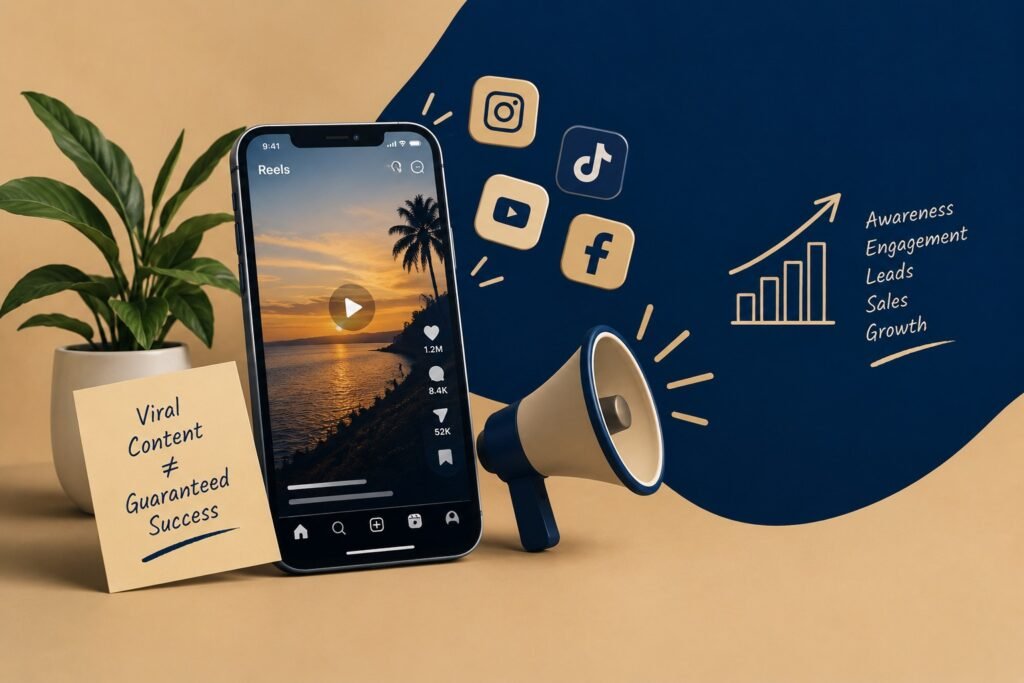
Can Viral Content Be Considered a Successful Marketing Strategy?

These days, we see videos, reels, and posts going viral on social media almost every day. Sometimes, a simple video can get thousands or even millions of views within a short time. This is what we usually mean when we talk about viral content. For businesses, going viral can seem like a great opportunity. It can help a brand reach a huge number of people without spending a lot of money on advertising. But there is one important question: Does going viral always mean that a marketing strategy is successful? I don’t think the answer is always yes. Viral content can definitely give a brand a lot of attention, but views and likes alone don’t always mean that the business is actually growing. What really matters is what happens after people see the content. What Is Viral Content? Viral content is any type of content that spreads very quickly and reaches a large number of people in a short period of time. It could be a funny reel, an emotional video, a relatable post, a creative advertisement, or even something connected to a current trend. When people enjoy the content or feel connected to it, they are more likely to like, comment on, and share it. Social media platforms such as Instagram, Facebook, YouTube, and TikTok make it possible for content to reach people far beyond a brand’s existing followers. For example, a small business might post a simple reel that unexpectedly gets millions of views. Within a few days, the business could see more followers, profile visits, messages, and website traffic. That is the real power of viral content. Why Do Businesses Want to Go Viral? The main reason is simple: attention. When a piece of content goes viral, more people get to know the brand. It can increase reach, followers, engagement, and brand awareness. For a small business, this can be especially helpful because viral content can create a lot of exposure without requiring a huge advertising budget. It can also make a brand feel more relatable. When people enjoy a brand’s content or find it interesting, they may remember the brand even after the post is no longer trending. But getting attention is only the beginning. Does Going Viral Mean Marketing Success? This is where I think businesses need to look beyond the numbers. Imagine a brand’s reel gets 5 million views, but only a few people visit the website and hardly anyone buys the product. The reel clearly performed well in terms of reach, but did it actually help the business? Maybe not. This is why views should not be the only way to measure success. Businesses should also look at things like: If a viral post brings the right people to the brand and encourages them to take some kind of action, then it has much more value. Viral Content vs Meaningful Content Not everything that goes viral is useful for a business. Sometimes people share content simply because it is funny, emotional, surprising, or connected to a trend. They may enjoy the post without having any real interest in the brand. This can create what I would call “empty attention.” For example, imagine a clothing brand creates a funny video based on a popular trend. The video gets millions of views, but most of the people watching it are not interested in buying clothes from that brand. Now compare that with another video that gets only 50,000 views but reaches people who are genuinely interested in fashion and brings actual customers. The second video could be much more valuable to the business. So, reaching the right people is often more important than reaching the most people. When Can Viral Content Be Successful? In my opinion, viral content becomes a successful marketing strategy when it has a clear purpose behind it. If the goal is brand awareness, going viral can introduce the brand to a much larger audience. If the goal is sales or lead generation, the content needs to encourage people to visit the website, check out a product, send an enquiry, or take another useful action. This is why businesses shouldn’t create content just because they want it to go viral. There should be a reason behind the content and a clear goal that it supports. A strong viral campaign usually brings together creativity, relevance, and strategy. The Importance of the Right Audience One thing businesses should always remember is that not every viewer is a potential customer. It is easy to get excited when a post receives thousands or millions of views. But if those views come from people who have no interest in what the business offers, they may not bring much real value. For example, if a digital marketing agency creates an SEO-related video and it reaches business owners, entrepreneurs, and people interested in marketing, those views can be much more useful. This is why understanding your target audience is so important. Content should be something that the right audience can relate to, learn from, or find genuinely useful. Can Viral Content Create Long-Term Growth? Viral content can definitely give a business a strong start, but one viral post is usually not enough to build a successful brand. After getting attention, a business needs to keep that audience interested. This means creating useful content regularly, communicating with followers, building trust, and offering a good product or service. For example, a viral reel might bring thousands of new followers to a brand’s page. What happens next is important. If the brand continues creating valuable content, those new followers may slowly become loyal customers. But if the brand stops creating content or fails to connect with its new audience, that viral moment may disappear quickly. So, viral content can open the door, but consistent content and good marketing are what keep the audience connected. Final Thoughts So, can viral content be considered a successful marketing strategy? Yes — but I don’t think going viral should be the main goal. Millions of

Can Viral Content Be Considered a Successful Marketing Strategy? Read More »

Best digital marketer in Malappuram-image

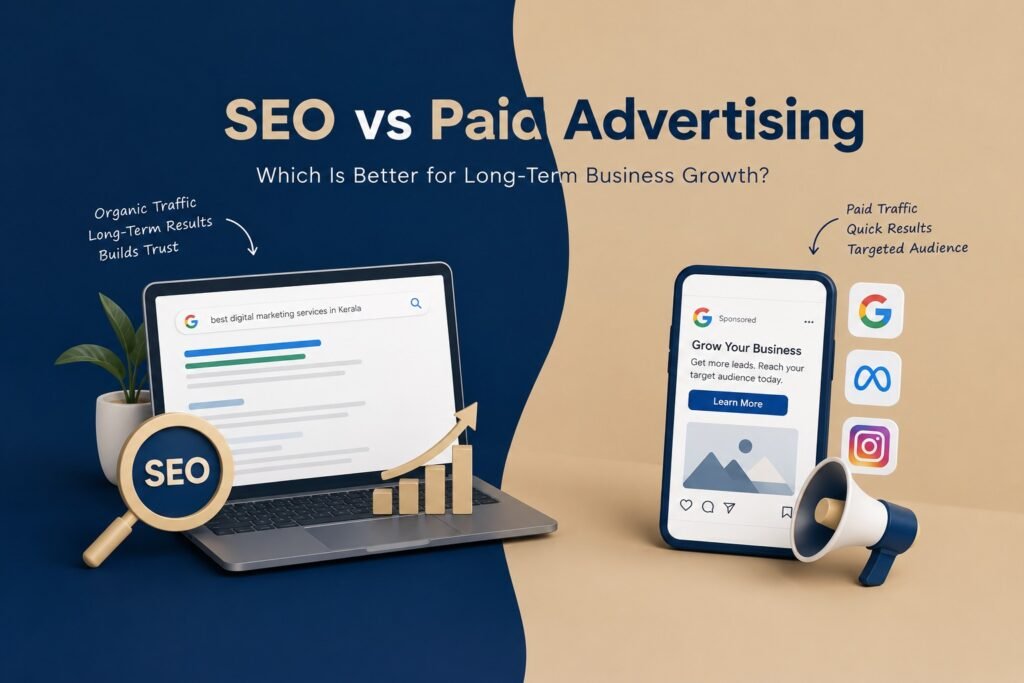
SEO vs Paid Advertising: Which Is Better for Long-Term Business Growth?

Today, almost every business needs an online presence to reach more people and grow. There are many ways to promote a business online, but SEO and Paid Advertising are two of the most popular digital marketing strategies. Both methods can help a business reach the right audience, bring more traffic, and increase sales. However, they work in different ways. Paid advertising can bring results quickly, while SEO takes more time but can help a business grow naturally over the long term. So, which one is actually better for long-term business growth? What Is SEO? SEO stands for Search Engine Optimization. Simply put, it is about making a website better so that it can appear higher on search engines like Google. SEO involves different activities such as finding the right keywords, creating useful content, improving website speed, optimizing web pages, and getting quality backlinks. One thing I really like about SEO is that it can bring organic traffic. You don’t have to pay for every person who visits your website from search results. If your website gets a good ranking, it can continue bringing visitors over time. For example, imagine someone searches for “best digital marketing services in Kerala.” If a website is properly optimized for that search, it has a chance of appearing in the results and reaching someone who is already interested in that service. What Is Paid Advertising? Paid advertising is another popular way businesses reach people online. Here, businesses pay platforms such as Google, Facebook, and Instagram to display their ads to a selected audience. The biggest advantage of paid advertising is speed. You don’t have to wait for months for your website to rank. Once your campaign is running, your ad can start reaching potential customers. For example, if a business launches a new service and wants people to know about it quickly, it can use Google Ads or Meta Ads to reach the right audience. Paid advertising can be especially useful for promotions, new product launches, special offers, lead generation, and campaigns where getting quick attention is important. Short-Term Results vs Sustainable Growth This is where I see the biggest difference between SEO and Paid Advertising. Paid advertising is great when you want quick results. A good campaign can bring website visitors, leads, sales, and brand awareness in a short period of time. But there is one important thing to remember: the results are connected to your advertising budget. Once you stop running the ads, the paid traffic can also stop. SEO takes a different approach. It requires time, regular effort, and patience. You may not see big results immediately, but as your website becomes more visible and gains authority, it can continue bringing organic traffic. This makes SEO a good option for businesses that are thinking beyond quick results and want to build a strong online presence for the future. Which One Is Better for Long-Term Growth? If the main goal is long-term business growth, I would choose SEO as the stronger foundation. The reason is simple. SEO helps a business build organic visibility and credibility over time. Good content can continue bringing visitors long after it has been published, and a well-optimized website can keep attracting people who are searching for the products or services you offer. However, I don’t think Paid Advertising should be ignored. Paid ads are extremely useful when a business wants quick visibility or immediate results. They also make it easier to target a specific audience based on factors such as location, interests, age, and online behavior. So, instead of choosing only one, businesses can use both strategies based on their needs. SEO vs Paid Advertising: A Simple Comparison SEO Paid Advertising Brings organic traffic Brings paid traffic Takes time to show results Can provide quick results Helps build long-term visibility Works well for immediate campaigns Can reduce dependence on paid traffic over time Needs a continuous advertising budget Builds website authority and trust Allows businesses to target specific audiences Why Use Both SEO and Paid Advertising? In my opinion, using both can be a smarter approach than depending completely on one strategy. For example, a new business can use Meta Ads or Google Ads to get quick visibility and reach potential customers. At the same time, it can work on SEO by creating useful content, using relevant keywords, and improving the website. In the beginning, paid advertising can help bring immediate attention to the business. As the SEO efforts start working and organic traffic grows, the business may become less dependent on paid traffic. This creates a good balance between getting results today and building growth for tomorrow. Final Thoughts SEO and Paid Advertising both have their own strengths. Paid advertising is a great choice when you need quick results, while SEO is more focused on building something that can grow over time. For a business that is thinking about long-term growth, SEO can be a valuable investment. At the same time, Paid Advertising can help the business get faster results and reach the right audience when needed. So, I don’t think the real question is simply “SEO or Paid Advertising?” The better question is “How can we use both effectively?” Using SEO to build sustainable organic growth and Paid Advertising to get immediate visibility can give a business the best of both worlds.

SEO vs Paid Advertising: Which Is Better for Long-Term Business Growth? Read More »